


The Eye Shape the Internet Keeps Obsessing Over
There is something about eyes that bypasses reason entirely. Long before a person speaks or makes a gesture, their eyes communicate emotions and intentions. Human beings naturally interpret these visual signals within moments. That is why, when people first encounter the concept of sanpaku eyes, it lands with such immediate force. A single photograph can trigger an immediate reaction. Sometimes an image creates a sense of discomfort, exposure, or even unease without any obvious explanation.
Whether that feeling is meaningful or just a trick of the brain is exactly what this article is here to explore.
Sanpaku eyes the eye shape where white is visible in three areas rather than the usual two have captivated cultures across East Asia for centuries. They sparked a philosophical movement in 1960s America. Over the years, people have connected sanpaku eyes to well-known figures, including political leaders, cultural icons, and notorious criminals. And today, they fuel an endless cycle of viral content, amateur diagnosis, and genuine scientific curiosity.
So what is actually going on here?The debate remains open: does the concept reflect genuine traditional insight, or does it simply demonstrate the human tendency to find patterns where none exist? The truth, as it usually is, sits somewhere more interesting than either extreme.
Sanpaku Eyes Defined: The Three Whites
The term sanpaku eyes comes from the Japanese word sanpakugan (三白眼), a compound of san (three) and haku/paku (white), literally meaning “three whites.” It describes an eye in which the sclera the white outer layer of the eyeball is visible not just on the left and right sides of the iris, but also either above or below it.
In a typical eye, when a person looks straight ahead, the iris sits centrally between the upper and lower eyelid. The colored portion touches both lids, and white appears only on each side. According to sanpaku theory, the natural harmony of the eye changes when a visible imbalance appears around the iris. The iris drifts either upward, leaving white below, or downward, leaving white above and suddenly the eye reads differently. It looks wider. More exposed. In some faces, more vulnerable. In others, more threatening.
That single visual difference, so small it can measure less than a millimeter, carries an enormous amount of cultural and psychological baggage. And it all starts with where you look for meaning.
A History Rooted in Ancient Face Reading
Long before the word sanpaku appeared in any English language text, the practice of reading fate and character from the human face was already ancient. Known broadly as physiognomy and in Japanese tradition as kanso face reading was a serious intellectual discipline in China, Japan, and Korea for thousands of years.
Practitioners believed the face was a living map of a person’s inner world. The shape of the forehead revealed intelligence. The line of the jaw indicated willpower. The ears signaled social fortune. Traditional observers often regarded the eyes as the most expressive and revealing feature of the human face.
In this framework, the ideal eye had the iris perfectly centered, touching both lids cleanly. Many practitioners believed that any disturbance in this visual balance reflected deeper issues, including physical illness, emotional struggles, ethical decline, or a troubled future. The visible white of sanpaku eyes was one of the most significant warning signs a face reader could identify, a red flag written directly into the body.
This wasn’t fringe thinking. These ideas shaped how merchants assessed trading partners, how families evaluated potential spouses, how physicians sized up patients before asking a single diagnostic question. Eyes told stories, and sanpaku eyes told dark ones.
George Ohsawa and the Book That Started It All

The moment sanpaku eyes crossed from Eastern tradition into Western pop culture has a specific timestamp: 1965, and a specific author: George Ohsawa.
George Ohsawa, a Japanese educator and pioneer of the modern macrobiotic movement, promoted the idea that physical and spiritual well-being were closely connected. He argued that diet and lifestyle directly influenced this balance. In his view, excessive consumption of sugar, refined grains, alcohol, animal fats, and other unhealthy foods could affect both the body and the mind, with visible signs appearing in the eyes.
In You Are All Sanpaku, written with journalist William Dufty, Ohsawa laid out his theory in vivid terms: sanpaku eyes were nature’s warning system, a sign that “a man’s entire system physical, physiological, and spiritual was out of balance.” The person carrying the trait was, in his words, “accident-prone,” heading toward an early and tragic end.
To Western readers, this might have sounded mystical and abstract until Ohsawa reportedly pointed to photographs of President John F. Kennedy and warned of impending danger, months before Kennedy’s assassination in November 1963.Researchers have never independently confirmed whether these predictions occurred before the events in question or whether the claims emerged afterward. But the story spread, and with it, the entire mythology of sanpaku eyes as an omen.
The idea that you could look into someone’s eyes and see their fate was intoxicating. It still is.
Yin Sanpaku vs Yang Sanpaku
The tradition that Ohsawa drew on doesn’t treat all sanpaku eyes as the same. There is a meaningful distinction at least culturally between the two types, and understanding it helps explain why some famous examples feel tragic while others feel sinister.
Yin Sanpaku: White Below the Iris
This is the more common form. When the iris sits slightly high, the lower eyelid pulls away, revealing a band of white sclera beneath the colored portion.Traditional face-reading systems associated yin sanpaku with vulnerability and exposure to external dangers. Practitioners believed that affected individuals might unknowingly move toward harmful circumstances beyond their control.
Ohsawa connected yin sanpaku to dietary imbalance and physical depletion. Observers often linked the condition to people who regularly consumed large amounts of sugar, alcohol, or recreational drugs. It was a body speaking its distress in the only language available to it.
Culturally, yin sanpaku carries a melancholic undertone. Supporters of the theory frequently point to figures such as Princess Diana, John Lennon, Marilyn Monroe, John F. Kennedy, and Abraham Lincoln, all of whom experienced tragic or unexpected deaths. That pattern, however cherry picked and retrospective it may be, lends yin sanpaku a certain haunting quality in the public imagination.
Yang Sanpaku: White Above the Iris
Yang sanpaku is rarer and carries a different weight entirely. When the upper eyelid sits unusually high, white becomes visible above the iris and the effect is immediately unsettling. Where yin sanpaku can look vulnerable or wide-eyed, yang sanpaku often looks predatory. The eyes seem to stare rather than see, fixed in a way that activates the brain’s threat-detection circuitry almost immediately.
Traditional face reading interpreted yang sanpaku as a sign of internal danger rage, volatility, an inability to control violent impulses. The danger in this case didn’t approach the person from outside; it lived within them.
Discussions of yang sanpaku often reference Charles Manson, whose photographs display characteristics commonly associated with this eye pattern.The internet has since turned yang sanpaku into a kind of informal criminal profiling tool, with amateur analysts scanning mugshots and news photos for the telltale white above the iris.
The Celebrity Connection: Who Has Sanpaku Eyes?

Part of what makes sanpaku eyes so persistently fascinating is how many recognizable faces appear on the lists. Once you know what to look for, you begin cataloguing them instinctively.
Among those most frequently named:
- Billie Eilish — perhaps the most widely cited contemporary example of yin sanpaku, with distinctly visible white below her irises in most photographs and video footage
- Princess Diana — her gentle downward gaze became one of the most analyzed eyes in the history of the concept
- John F. Kennedy — the original Western case study, whose fate became permanently entangled with the mythology
- Marilyn Monroe and John Lennon — both yin sanpaku, both wildly beloved, both gone far too soon
- Abraham Lincoln — whose photographs, daguerreotypes included, clearly show the trait
- Robert Pattinson, Mila Kunis, Jennie from BLACKPINK — regularly cited in contemporary pop culture discussions
- Charles Manson — the dominant cultural reference for yang sanpaku, whose photographs became the de facto illustration of the concept
What’s important to hold onto while reading that list is the selection mechanism at work. In many cases, people classified these individuals as sanpaku only after learning about their life stories and eventual outcomes. No one compiled a list of sanpaku eyed people in 1950 and tracked their outcomes over fifty years. Critics argue that people build the pattern in reverse. Because the human mind naturally searches for meaning and connections, it can easily mistake selective examples for evidence.
The Science of Scleral Show
Strip away the folklore and what remains is a straightforward anatomical feature with a clinical name: scleral show, or more specifically, inferior scleral show (white below the iris) or superior scleral show (white above it). This is the language eye doctors and maxillofacial surgeons use, and their understanding of it has nothing to do with fate.
A 2020 clinical study measuring eyelid position in a healthy general population found that approximately 50 percent of individuals showed some degree of inferior scleral show, averaging around 0.4 millimeters. About 19 percent displayed a more pronounced version of one millimeter or more. These are not unusual findings. They’re variations in normal human anatomy, as unremarkable from a medical standpoint as the color of the iris itself.
No peer-reviewed study has ever established a credible link between scleral show and mortality risk, violent behavior, psychological instability, or any other outcome the folklore predicts. The trait has been studied in contexts ranging from plastic surgery outcomes to evolutionary biology, and in none of those contexts does it emerge as a predictor of personality or fate.
What it does reveal, when studied carefully, is something far more mundane and far more interesting: the precise geometry of your face, passed down through your family line, shaped by evolutionary pressures that had nothing to do with character or destiny.
What Actually Causes Visible Sclera?
Certain facial structures naturally expose more of the eyeball. For example, a shallower eye socket or a negative orbital vector can make the sclera more visible beneath the iris.
Orbital anatomy is the primary driver. The shape and depth of the bony socket that houses the eye the orbit determines how the eyeball sits within the face. Some eyelid surgeries, including lower blepharoplasty procedures, may increase scleral visibility when surgeons remove excessive tissue from the lower eyelid. This is a skeletal feature, not a behavioral or spiritual one.
Eyelid position matters enormously. The natural resting height of both the upper and lower eyelids, controlled by muscles and tendons, varies significantly between individuals and populations. Some people simply have lids that rest lower or higher than average, and this exposes more or less sclera accordingly.
Age plays a role over time. As the face matures, soft tissue descends and bony structures subtly shift. Lower eyelids tend to drop with age, revealing more white below the iris which is why scleral show sometimes becomes more pronounced in middle age and beyond.
Medical factors can also alter scleral visibility. Thyroid eye disease (Graves’ ophthalmopathy) causes the eyes to protrude forward, dramatically increasing visible white. Facial nerve damage, orbital trauma, and certain autoimmune conditions can affect eyelid muscle function. One of the least explored aspects of the topic involves the role of sanpaku eyes in Japanese visual storytelling, where artists often apply the concept with deliberate symbolic meaning.
And yes, fatigue, stress, and substance use can temporarily alter the appearance of the eyes by affecting pupil size and muscle tone. This is likely the kernel of biological truth inside the folk belief a genuinely unwell person may show more sclera temporarily but the leap from “sometimes true in extreme illness” to “a permanent anatomical feature predicts your fate” is an enormous and unjustified one.
Sanpaku Eyes in Anime, Manga, and Japanese Pop Culture
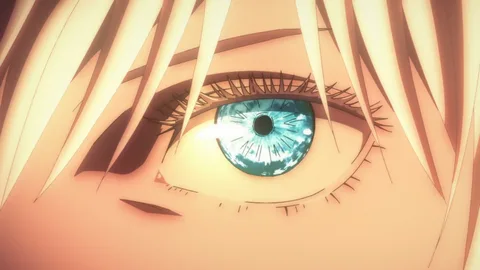
Many manga, anime, and visual media creators use sanpaku eyes—especially the yang type—as a visual cue for instability, danger, intensity, or psychological depth.
In manga and anime, character design is a precise visual language. Creators use eye shape, size, and expression to communicate personality, emotional state, and moral alignment in ways that transcend dialogue. Historical accounts suggest that some Edo-period artists portrayed criminals with exaggerated sanpaku eyes to visually emphasize wrongdoing or social deviance. A character drawn with white visible above the iris will immediately read as dangerous or unhinged to any experienced manga reader, even without a single word of context.
This isn’t casual association. It’s a deliberate, codified artistic convention that draws on the same cultural roots as traditional face reading, filtered through centuries of aesthetic development. In Edo era Japan, criminals were reportedly depicted in woodblock prints with exaggerated sanpaku eyes as a visual marking of their transgression.
The trait also carries aesthetic appeal in contemporary Japanese culture. Modern beauty trends have added another dimension to the phenomenon. Certain cosmetic procedures in Japan intentionally create a sanpaku-like appearance because some people consider the look distinctive, dramatic, and attractive. Gyaru makeup styles, harajuku fashion, and K-beauty-influenced aesthetics frequently incorporate lower eyelid techniques that deliberately increase the visible white beneath the iris.
This duality danger and desirability coexisting in the same visual trait is part of what makes the concept so enduring. Sanpaku eyes occupy a fascinating aesthetic middle ground where vulnerability and threat blur together.
The TikTok Era: Why Sanpaku Eyes Keep Going Viral
Sanpaku eyes are not a new discovery, but they rediscover themselves every few months, and social media is why.
The format of short-form video is perfectly engineered to deliver the sanpaku experience: a celebrity close-up, a dramatic voice over naming the trait, a cut to Charles Manson, a cut to Billie Eilish, and then the punchline look at the white in their eyes. It takes fifteen seconds. It triggers the exact neurological cascade the concept has always triggered, except now it reaches millions of people simultaneously.
TikTok’s algorithm rewards content that generates strong emotional responses curiosity, unease, the slight thrill of a pattern recognized. Sanpaku eyes deliver all three. The comment sections of these videos fill instantly with people checking their own eyes in the camera, tagging friends, listing celebrities they’ve just diagnosed, and debating whether yin or yang is “worse.”
There’s also a genuine educational dimension to the viral cycle, which is healthier than it might appear. The best of these videos distinguish between the folklore and the science, note that half the population shares the trait, and redirect curiosity toward the legitimate history of the concept. Sanpaku eyes are one of those rare internet rabbit holes that actually leads somewhere real Japanese cultural history, the philosophy of physiognomy, the science of orbital anatomy, evolutionary theories of human eye structure.
That’s not nothing. The internet’s fascination with sanpaku eyes has introduced millions of people to ideas they never would have encountered otherwise.
Do Sanpaku Eyes Reveal Anything Real About a Person?
After all of this the history, the science, the folklore, the viral cycles it’s worth asking directly: do sanpaku eyes tell us anything true about the person who has them?
The honest answer is nuanced.
They tell us nothing reliable about personality, fate, moral character, or psychological stability. The evidence for any of those claims is zero. The celebrity lists are selection bias. The Manson association is coincidence amplified by cultural repetition. The “omen” framing is folk belief dressed up as observation.
But eyes do communicate something. The cooperative eye hypothesis a well-supported evolutionary theory suggests that humans developed their unusually visible sclera specifically to make gaze communication easier. Because the white of our eyes contrasts so sharply with the iris, other people can track where we’re looking with remarkable precision. Our eyes evolved to be readable.
And because we’re so exquisitely attuned to reading eyes, even small deviations in the expected pattern trigger notice. A wider than usual scleral band changes how an expression reads. It can make a neutral face look startled, a calm face look anxious, or an intense face look unhinged. These are real perceptual effects not on the character of the person, but on how their face communicates.
In that narrow, specific sense, sanpaku eyes do affect perception. They don’t reveal truth. But they do influence impression. And in a world where first impressions still carry enormous weight, that’s worth understanding.
What to Do If You Think You Have Sanpaku Eyes
If you’ve checked the mirror and see more white beneath or above your iris than you expected, the first thing worth doing is relaxing. You’re in excellent company and in the majority.
For most people, sanpaku eyes are a fixed anatomical feature, inherited and permanent. They require no treatment and cause no harm.When this eye characteristic has existed throughout your life and remains unchanged, it simply reflects your natural facial structure.
A recent increase in visible sclera, especially when accompanied by changes in vision, eye comfort, or facial appearance, deserves professional attention. In such cases, discussing the symptoms with an eye specialist or general physician can be helpful. The concern is not the folklore surrounding sanpaku eyes but the possibility that certain medical conditions may influence eyelid position or eye prominence.
People who undergo eyelid surgery occasionally notice greater lower scleral exposure during recovery. Medical professionals recognize this outcome as a potential complication of blepharoplasty and can evaluate whether further treatment is necessary. Hyaluronic acid fillers in the lower eyelid area are one treatment option; in some cases, corrective surgery may be considered. An oculoplastic surgeon would be the right specialist to consult.
And if you simply find the trait interesting aesthetically, historically, or culturally you’re in excellent company there too. Sanpaku eyes have captivated physicians, philosophers, artists, internet detectives, and ordinary people for centuries. The curiosity is well-placed. Just be careful about the conclusions you draw from it.
Conclusion
Sanpaku eyes sit at a fascinating intersection part anatomy, part cultural mythology, part internet phenomenon. They’re a real, measurable, common feature of human faces, and they carry a weight of meaning that has been building for centuries across multiple cultures. That weight is worth taking seriously as a cultural and psychological phenomenon, even as the supernatural claims around it dissolve under any serious scrutiny.
The ancient face readers who first catalogued the trait weren’t wrong to notice that eyes communicate something. They were wrong to conclude that scleral position determines fate. There’s a meaningful difference between those two things, and holding both simultaneously taking the observation seriously while questioning the interpretation is the most honest place to land.
If you have sanpaku eyes, you share them with roughly half the human population, with some of the most beloved and celebrated figures in recorded history, and with countless millions of people living full, healthy, entirely uneventful lives. The whites of your eyes are not a prophecy. They are simply the geometry of your face, as particular and as ordinary as every other feature you inherited from the long, branching line of people who came before you.
Look into your own eyes. Notice what they actually show you: attentiveness, depth, the flicker of a thought. That is what eyes really reveal. Everything else is a story we tell about them.
FAQ:
Are sanpaku eyes a bad sign?
In traditional Japanese folk belief, they were considered a negative omen a sign of physical imbalance or danger. In modern medical science, they’re simply a common anatomical variation with no proven link to health outcomes, personality, or fate. Having sanpaku eyes is not a bad sign in any clinically meaningful sense.
How common are sanpaku eyes?
Very common. Clinical research indicates that approximately 50 percent of the general population shows some degree of visible white below the iris (yin sanpaku). Yang sanpaku white above the iris is significantly rarer but still present in a meaningful portion of the population. It’s one of the most frequent natural eye shape variations in humans.
Can your eyes become sanpaku over time?
Yes, in some cases. While most people with sanpaku eyes are born with the anatomical features that create it, the trait can develop or become more noticeable with age as lower eyelids descend, after eyelid surgery (blepharoplasty), or as a result of certain medical conditions like thyroid eye disease. Temporary changes can also result from extreme fatigue or illness.
What celebrities have sanpaku eyes?
The most frequently cited examples include Billie Eilish, Princess Diana, John F. Kennedy, Marilyn Monroe, John Lennon, Abraham Lincoln, Robert Pattinson, and Mila Kunis for yin sanpaku (white below the iris), and Charles Manson for yang sanpaku (white above the iris). It’s worth noting that many of these individuals are selected retrospectively based on their fates, which creates significant selection bias in the pattern.
Is there a way to change or correct sanpaku eyes?
For inherited sanpaku eyes with no underlying medical cause, no correction is medically necessary since the trait is not a health concern. Some people seek cosmetic procedures to reduce the appearance of scleral show, such as hyaluronic acid fillers for lower eyelid support. Interestingly, in Japan some individuals actively seek to enhance or create the sanpaku appearance through cosmetic surgery or makeup, as it’s considered aesthetically distinctive in certain beauty cultures.