
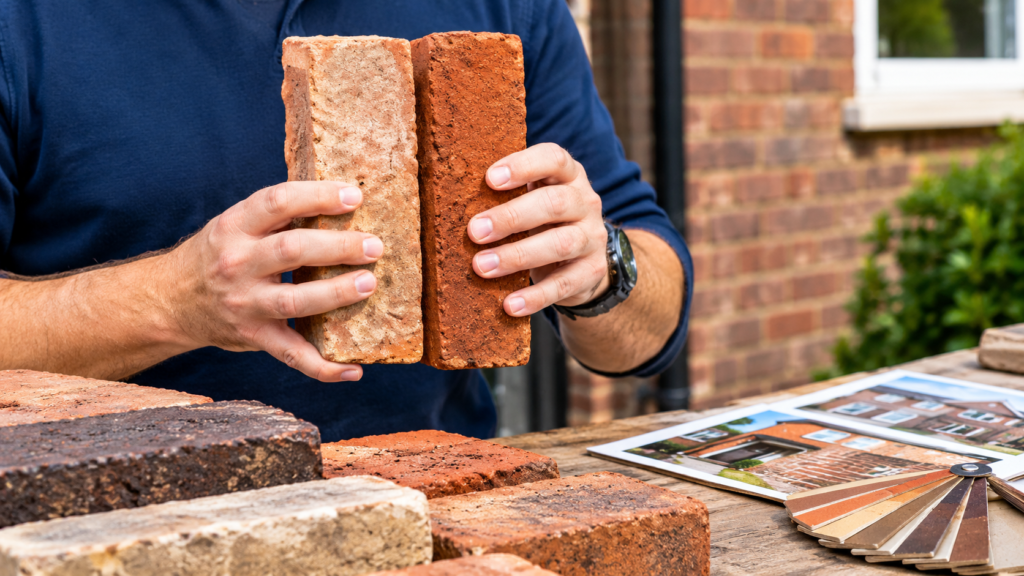

If you have ever stood in front of an old wall trying to work out why the new brick beside it looks slightly off, you already understand why brick matching matters. Getting it wrong is obvious the moment the render dust settles. Getting it right is something most people never even notice, which is exactly the point.
This guide walks you through everything involved in brick matching, from the small details that make or break a match to the practical steps you can take if your original brick is no longer available. Whether you are planning an extension, repairing a damaged wall, or restoring a period property, you will find clear, honest answers here rather than a sales pitch dressed up as advice.
What Is Brick Matching and Why It Matters
Brick matching is the process of finding a brick that closely resembles, or ideally replicates, the bricks already used in an existing building. This usually means matching colour, texture, size and sometimes the way the brick weathers over time.
It sounds simple until you try it. Brick is a natural material made from clay, and clay pits change over the decades as sources are exhausted or reformulated. A brick made in 1985 might look nothing like the same product line today, even if it carries the same name.
Good brick matching protects the appearance and value of a property. A mismatched extension can make an otherwise well designed home look unfinished, while a poor repair on an older building can draw the eye straight to the flaw. On listed or period properties, it can also affect whether a project meets planning requirements at all.
When Do You Need Brick Matching
Brick matching comes up more often than people expect, and the approach you take often depends on the type of project.
Extensions and New Additions
New extensions are one of the most common reasons homeowners search for brick matching. You want the addition to look like it was always part of the house, not bolted on afterwards. This is where colour, size and bond pattern all need to work together.
Repairs and Repointing
Cracked, spalled or damaged brick sections need replacing without creating a visible patch. Even a handful of new bricks in the wrong shade can stand out against decades of natural weathering on the surrounding wall.
Restoring Older or Listed Properties
Restoration work often involves bricks that are no longer manufactured at all. In these cases, finding a genuine period match becomes far more involved, and specialist reclaimed brick suppliers usually become part of the solution.
The Key Factors That Affect a Good Brick Match
Most people think brick matching is purely about colour. In reality, several factors work together, and missing even one can undo an otherwise close match.
Colour and Texture
Colour is the first thing anyone notices, but texture is just as important. A smooth faced brick next to a heavily textured one will look mismatched even if the colours are almost identical under normal light.
It also helps to view bricks in different lighting conditions. A match that looks perfect in bright sunlight can look completely different on an overcast day or under artificial light at dusk.
Size and Dimensions
Brick sizes have changed over time, and even small differences in length, width or height can throw off the bond pattern and joint spacing. A mason can usually compensate for very minor variations, but larger discrepancies will be visible in the finished wall.
If you can only get close on one factor, many brick specialists suggest prioritising size and texture over colour, since colour can sometimes be adjusted afterwards while dimensions cannot.
Brick Bond and Mortar Colour
The brick itself is only part of the picture. The bond pattern, meaning the arrangement of bricks such as stretcher bond or Flemish bond, needs to be replicated for visual consistency. Mortar colour matters just as much, since a bright white joint against aged, greyed mortar can undo a good brick match instantly.
How to Match Bricks Step by Step
There is no need to guess your way through this process. Following a clear sequence saves time and avoids costly mistakes.
Step 1: Identify the Original Brick
Start by examining the existing brickwork closely. Note the colour range, texture, size and any visible patterns in how different shades are distributed across the wall.
Step 2: Check for Manufacturer Marks
Many bricks have an identifying mark, often called a frog mark, pressed into one face. This small stamp can sometimes be traced back to the original manufacturer, which dramatically narrows down your search.
Step 3: Get Expert Help or Use a Free Matching Service
Several UK brick manufacturers and merchants offer free matching services where you send photos of your existing brickwork and receive recommendations in return. This is often the fastest and most reliable route, particularly if the manufacturer mark is missing or unreadable.
Clear, close up photographs taken from around a metre away, in natural daylight and on a clean section of wall, will give you far more accurate results than blurry or shaded images.
Step 4: Build a Sample Panel Before Committing
Before ordering a full pallet, most experienced masons recommend building a small sample panel, typically forty to a hundred bricks, laid with the intended mortar and bond. This lets you see exactly how the match will look on a larger scale, in real daylight, before committing to the full project.
This single step prevents the majority of costly brick matching mistakes.
What If You Cannot Find an Exact Match
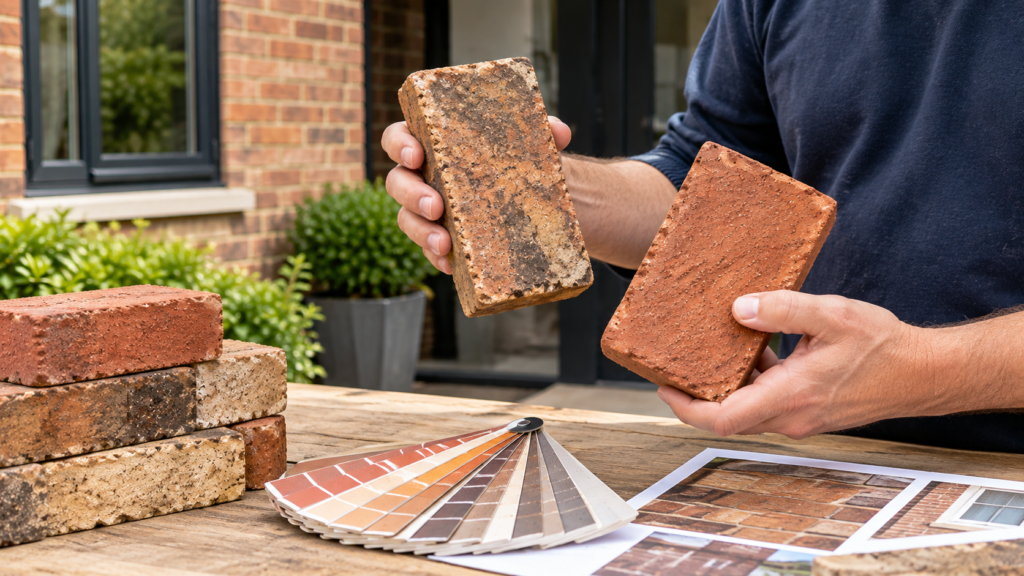
Sometimes the original brick is simply no longer made. This is common with older properties, and it does not mean the project is impossible.
Blending Multiple Brick Colours
If a single brick does not match, blending two or three complementary colours can often recreate the look of the original wall. This approach works particularly well on properties where the existing brickwork already contains natural colour variation.
Using Reclaimed Brick
Reclaimed brick suppliers specialise in sourcing genuine period bricks salvaged from demolished buildings. This is often the best option for historic restorations where authenticity matters as much as appearance.
Staining New Brick
New brick can sometimes be professionally stained to bring its colour closer to the original. This works best when the new brick is already a good match in size and texture, and only the colour needs adjusting.
Custom Made Brick
For high value restorations, some specialist manufacturers can produce custom brick to match the original size, colour and texture exactly. This route takes longer and costs more, but it remains the most reliable option when nothing existing comes close.
Brick Matching for Listed Buildings and Conservation Areas
If your property is listed or sits within a conservation area, brick matching is not just an aesthetic choice, it can be a legal requirement. Local planning authorities often require evidence that replacement or additional brickwork matches the original in colour, size, texture and bond.
It is worth contacting your local conservation officer early in the process, ideally before ordering any brick. They can advise on acceptable options and may even have records of the original brick supplier for older developments in the area.
How Much Does Brick Matching Cost
Costs vary considerably depending on the route you take. A free matching service from a brick manufacturer costs nothing beyond the price of the brick itself. Reclaimed brick tends to sit at a premium compared to standard new brick, reflecting its scarcity and the labour involved in sourcing it.
Custom made brick is the most expensive option, since it usually requires a minimum order quantity and a dedicated production run. For a small domestic repair, matching costs are often minimal. For a full extension or restoration project, it is worth budgeting for brick as a distinct line item rather than assuming it will be a minor part of the overall build.
Common Mistakes to Avoid When Matching Brick
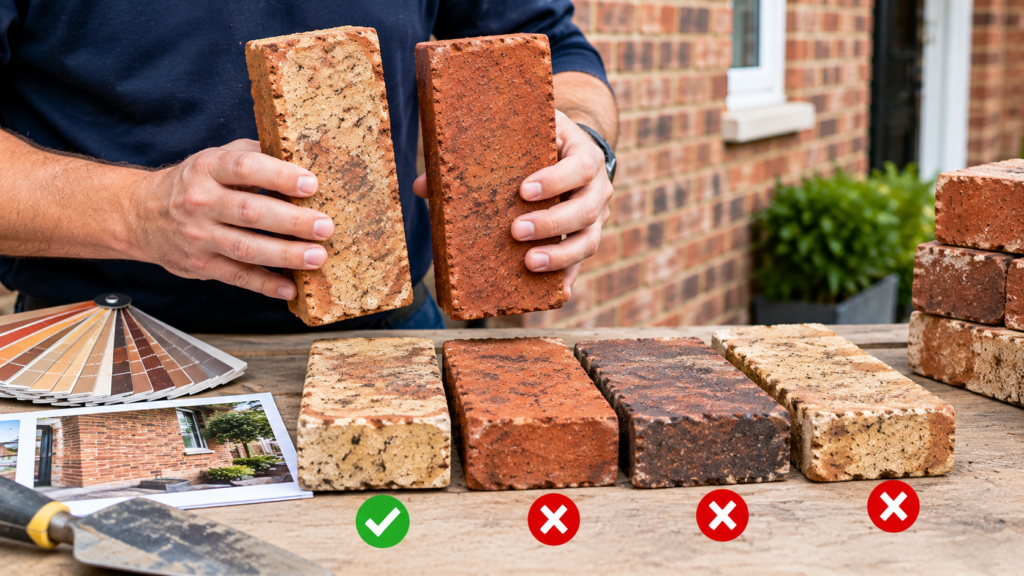
A few recurring mistakes cause most brick matching disappointments:
- Ordering a full pallet before testing a sample panel
- Judging colour from a single photo taken in poor lighting
- Overlooking mortar colour and joint style
- Ignoring size differences because the colour looks close
- Assuming a brick with the same name will look identical to the original, when the manufacturing facility or clay source may have changed
Avoiding these pitfalls is often the difference between a seamless result and a wall that never quite settles into the rest of the property.
Conclusion
Brick matching is part science, part patience, and it rewards anyone willing to slow down and check the details properly. Colour catches the eye first, but texture, size, bond pattern and mortar all play their part in a convincing match.
If you take one thing away from this guide, let it be this: always test a sample panel in daylight before committing to a full order. It is a small extra step that prevents the vast majority of brick matching regrets.
Whether your project is a simple repair, a full extension or a sensitive restoration on a listed property, taking a methodical approach to brick matching will save you time, money and the frustration of a wall that never quite looks right.
Frequently Asked Questions
What is brick matching?
Brick matching is the process of finding a brick that closely resembles an existing brick in colour, texture and size, most commonly for extensions, repairs or restoration work.
Can I match brick myself without professional help?
Yes, for straightforward projects you can compare samples yourself, though free manufacturer matching services often give faster and more accurate results, especially for older or discontinued bricks.
What if my brick is no longer manufactured?
You have several options, including blending similar colours, sourcing reclaimed brick, staining new brick, or commissioning a custom made brick for a closer result.
Do I need planning permission to match brick on an extension?
Not always, but for listed buildings or properties in conservation areas, matching brick correctly is often a specific planning requirement rather than a personal preference.
How long does brick matching usually take?
A straightforward match using a manufacturer’s free service can take days. Reclaimed or custom brick sourcing for historic projects can take several weeks depending on availability.