
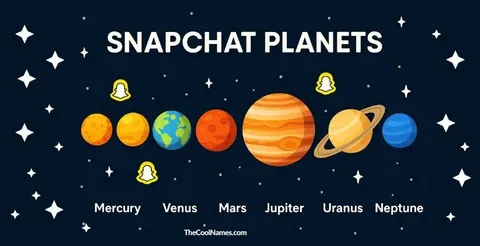

What Are Snapchat Best Friend List Planets?
If you have opened Snapchat recently and spotted a tiny glowing planet badge on a friend’s profile, you are not imagining things. The best friend list Snapchat planets feature is one of the most talked about additions to the app in recent years and once you understand how it works, it completely changes how you think about your friendships on the platform.
At its core, the feature turns your social circle into a miniature solar system. You are the Sun sitting at the center, and each of your closest friends becomes one of the eight planets orbiting around you. The closer the planet is to the Sun, the more you interact with that person. It is a visual, playful, and surprisingly personal way to see where your friendships stand in real time.
The feature is exclusive to Snapchat+ subscribers, Snapchat’s premium membership tier. But even if you are not a subscriber yet, understanding how the best friend list Snapchat planets system works will help you decide if it is worth unlocking and give you a solid read on what your friends might be seeing about you.
How the Snapchat Solar System Actually Works
Think of it this way every time you send a snap, start a chat, or keep a streak alive with someone, Snapchat is quietly tracking that interaction. It uses all of that activity data to rank your top eight most active friends and assigns each one a planet based on their position in that list.
The planet closest to the Sun Mercury goes to your absolute best friend on the app. The one you talk to every single day, the person your streak counter is highest with. From there, the planets move outward in the same order as our real solar system: Venus, Earth, Mars, Jupiter, Saturn, Uranus, and Neptune.
What makes the best friend list Snapchat planets concept so compelling is how concrete it feels. Instead of just a vague “best friend” emoji next to a name, you now have a visual indicator a specific, named planet that tells a much richer story. And the system updates constantly, meaning your rankings reflect your actual behavior right now, not who you were close to three months ago.
Every Planet in the Best Friend List Ranked and Explained
Here is a full breakdown of every planet in the Snapchat solar system and what it means for your friendship standing.
Mercury — Your #1 Best Friend
Mercury is the closest planet to the Sun, and in Snapchat’s universe, it belongs to the friend you interact with the most. If someone sees Mercury when they tap on your profile, it means you are their ride or die on Snapchat. The planet appears small and surrounded by bright red hearts, which makes it immediately recognizable.
Being someone’s Mercury is genuinely considered elite status in most friend groups. It means you are snapping daily, your streak is strong, and you are consistently at the top of each other’s chats.
Venus — Your #2 Best Friend
Venus claims the second spot. It appears with a warm pinkish-yellow glow and is surrounded by heart emojis in multiple colors pink, blue, and yellow reflecting a close but slightly less frequent connection than Mercury. If you are someone’s Venus, you are clearly still a top tier friend, just not the single most active one.
Earth — Your #3 Best Friend
Earth looks exactly how you would expect: blue and green, with a little grey moon orbiting beside it. Being in the third position still means a great deal. It signals a trusted, stable friendship the kind where you check in regularly and keep the connection warm without necessarily snapping every hour.
Mars — Your #4 Best Friend
Mars is a deep red planet surrounded by small stars and hearts. Your fourth closest friend on Snapchat lands here. The interaction is still meaningful and consistent, though slightly less frequent than your top three. Mars friendships tend to be people you genuinely like but maybe do not reach out to quite as often.
Jupiter — Your #5 Best Friend
Jupiter appears as a large orange planet with reddish tints. From this point in the best friend list Snapchat planets order, the heart emojis disappear from the planet’s rings replaced by stars alone. Jupiter sits solidly in the middle of your solar system, representing friends you value and interact with regularly, just not daily.
Saturn — Your #6 Best Friend
Saturn is one of the most visually distinctive planets in the lineup it comes with its iconic golden rings. Your sixth closest Snapchat friend earns this spot. A Saturn friendship usually means occasional snaps, group chats, or sporadic check ins rather than daily communication.
Uranus — Your #7 Best Friend
Uranus shows up as a green planet. The seventh spot in your solar system represents someone you stay in touch with, but whose interactions with you are less frequent compared to the others on the list. Still, being in anyone’s top eight is a meaningful distinction it means you stand out from potentially hundreds of contacts.
Neptune — Your #8 Best Friend
Neptune is the final planet in the Snapchat solar system a deep blue planet with no hearts on its rings, just stars. It marks your eighth closest friend based on interaction. While it is the farthest from the Sun, being someone’s Neptune still means you made their top eight. Out of everyone they know on the app, you are still one of the eight people they talk to most.
Best Friends Badge vs. Friends Badge
When you visit someone’s profile and tap on their badge, you will notice one of two labels: Best Friends or Friends. These are not the same thing, and the difference matters.
A Best Friends badge means you are in each other’s top eight. The ranking is mutual you appear in their solar system and they appear in yours. This badge has a gold ring around it, making it easy to spot.
A Friends badge means you rank somewhere in their top eight, but they do not make yours. It is a one-sided relationship in terms of the algorithm which can lead to some very real and occasionally awkward conversations. Someone can be your Mercury without you even appearing in their solar system at all.
Understanding this distinction is one of the most important parts of decoding the best friend list Snapchat planets feature. It reframes how you think about digital friendships and can sometimes reveal a gap between how close you feel to someone versus how that closeness shows up in behavior.
How Snapchat Decides Your Planet Ranking
Snapchat has not published the exact formula behind its ranking algorithm, but based on how the system behaves, the factors that matter most are clear:
- Snaps sent and received — this carries the heaviest weight by far
- Chat messages — direct messages in conversation contribute meaningfully
- Snap streaks — maintaining a streak with someone boosts their position
- Story interactions — viewing each other’s stories adds a small nudge
- Response time — consistently quick replies signal an active connection
What does not affect your planet ranking: how long you have been friends on the app, how many followers someone has, or how much time you spend scrolling through Discover. The system is purely interaction based, which means it is an honest reflection of who you actually talk to not who you think you are close to.
Do Your Planets Stay the Same Forever?
No and this is one of the features that makes the best friend list Snapchat planets system feel alive rather than static. Your rankings update continuously based on recent activity. Have a busy week where you barely open the app? Your friends might drift outward in your solar system. Start snapping someone every day after months of silence? They will move closer to the Sun quickly.
This dynamic nature is both exciting and, for some people, a little unsettling. It means the system is always honest. You cannot coast on a friendship you used to have the planets reflect who you are connected to right now.
How to Check Which Planet You Are on a Friend’s Profile
If you have an active Snapchat+ subscription, checking your planet on any friend’s profile takes just a few seconds.
- Open Snapchat and navigate to the friend’s profile you want to check.
- Look below their name and Bitmoji for a small badge it will read either “Best Friends” or “Friends” with a gold ring around it.
- Tap the badge.
- Snapchat will show you which planet you represent in their solar system, along with a brief description of what that position means.
If you do not see a badge at all, either your Snapchat+ subscription is inactive, the Friend Solar System feature has not been enabled in your settings, or you are not currently in that person’s top eight friends.
Why People Care So Much About Being Someone’s Mercury
There is a genuinely interesting social psychology at play here. The best friend list Snapchat planets feature has turned something that used to be invisible the relative closeness of digital friendships into something concrete and visible. And once something is visible, people react to it emotionally.
Being someone’s Mercury has become a badge of honor in many friend groups. TikTok is full of videos where people reveal which planet they are for their best friend, partners compare rankings with genuine investment in the outcome, and group chats light up when someone discovers they have dropped from Venus to Jupiter without warning.
What Snapchat has done is gamify closeness. And while that can be fun and affirming when you are high in someone’s solar system, it can also quietly reveal that a friendship you thought was strong may not be as active as you believed. The planets do not lie they only report what your behavior shows.
Is Snapchat+ Worth It Just for the Planet Feature?
Snapchat+ currently costs $3.99 per month, with discounts available on six month and twelve month plans. The subscription unlocks a range of features: custom app icons, exclusive wallpapers, a Story Rewatch count that tells you who has watched your story more than once, a BFF Pin to keep your number-one friend at the top of your chat list, and of course, the Friend Solar System.
For heavy Snapchat users, especially those who are deeply embedded in friend groups that already use the app daily, the planet feature alone tends to make the subscription feel worthwhile. It adds a layer of meaning and entertainment to something you are already doing.
If you use Snapchat casually checking in once every few days and sending the occasional snap the free version is likely enough. But if Snapchat is genuinely part of how you stay connected with your closest friends, seeing the full best friend list Snapchat planets picture is a genuinely rewarding experience.
Conclusion
The best friend list Snapchat planets feature is one of those ideas that sounds simple until you realize how much it reveals. Eight planets. Eight friends. A constantly shifting solar system that reflects your actual behavior rather than your intentions. Whether you are sitting at Mercury the most coveted spot or hovering at Neptune on the outer edge of someone’s world, the system tells a story about how your digital relationships are really playing out.
It is fun, it is surprisingly emotional, and it has changed how millions of people think about their friendships on the app. If you have not explored the Snapchat planet ranking system yet, now you have everything you need to understand it and maybe even use that knowledge to invest a little more in the connections that matter most to you.
FAQ
What is the best friend list Snapchat planets feature?
It is a Snapchat+ exclusive feature called the Friend Solar System. It assigns each of your top eight most interacted with friends a planet, from Mercury (your closest friend) to Neptune (your eighth closest), displayed as badges on friend profiles.
Do both people need Snapchat+ to see their planets?
No. Only you need an active Snapchat+ subscription to view planets. The planet you see on a friend’s profile is generated from your own subscription and your shared interaction data. Your friend does not need Snapchat+ for their planet to be visible to you.
Can I control who appears as my Mercury or top planets?
Not directly. The only way to influence your planet rankings is by interacting more or less with specific friends. Sending snaps, chatting, maintaining streaks, and engaging with stories all feed into the algorithm. There is no manual override.
Is my planet ranking visible to my friends?
No. Your planet rankings are completely private. When a friend with Snapchat+ visits your profile, they can only see which planet they are in your solar system not the full list of all your planets. Nobody can see your entire ranking unless they have access to your phone.
Why did my planet change without me doing anything?
Your planets update continuously based on recent activity. If someone else increased their interaction with you, or if you interacted less with a specific friend recently, the rankings will shift. The system reflects your behavior over the recent period, not your entire friendship history so even a week of less activity can move someone’s position.